
Discover the fascinating origins of flamenco, the people who shaped its history, and how an intimate Andalusian art form became a cultural treasure celebrated around the world.
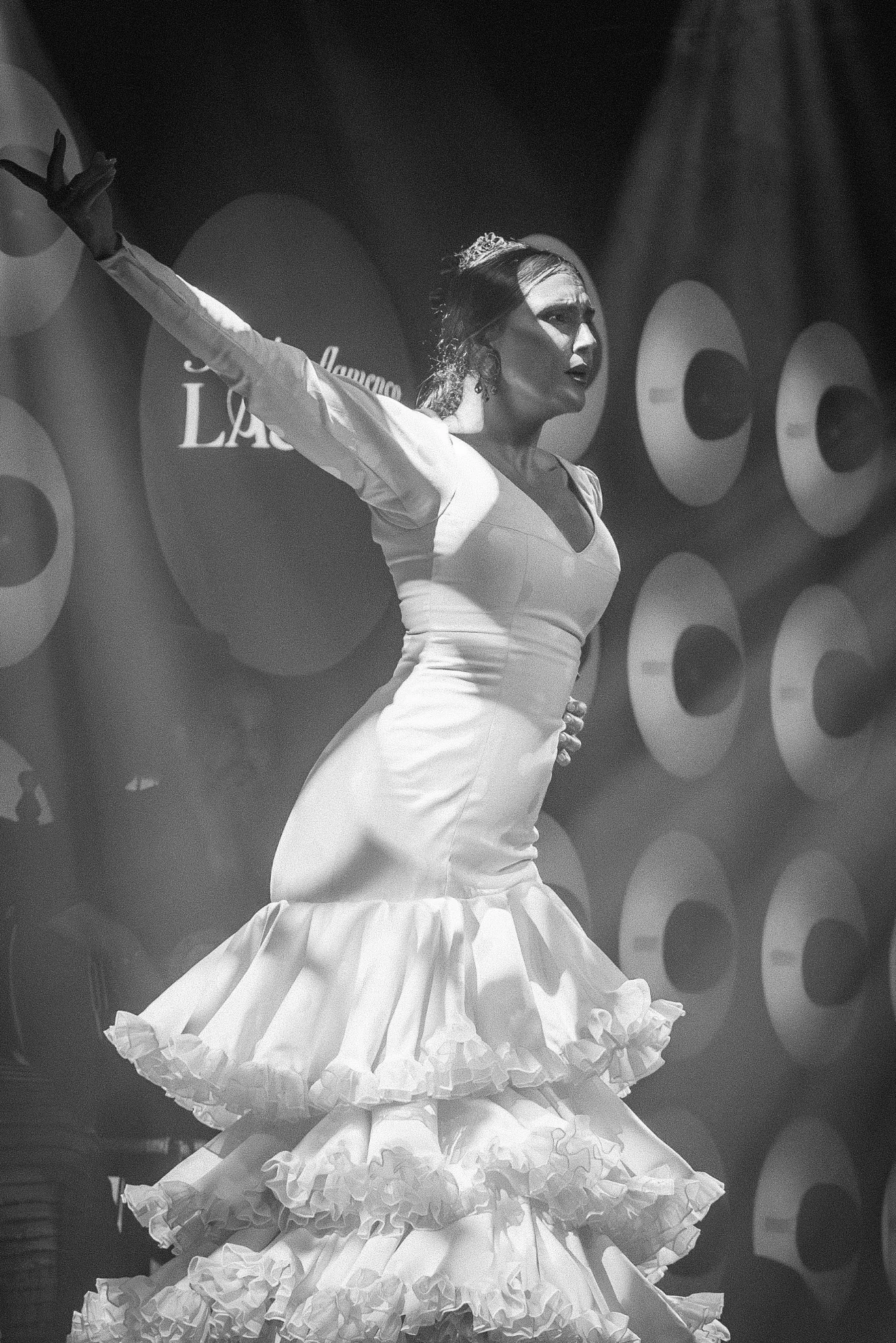
Imagine a dimly lit room somewhere in nineteenth-century Andalusia. A small gathering of people sits in silence. There is no orchestra, no elaborate stage, and perhaps not even a guitar.
Then a voice breaks the silence. It is raw, powerful and deeply expressive. Someone marks the rhythm with their hands; a dancer rises, responding instinctively to the music. For a moment, everything else disappears.
This is one way to imagine the intimate world from which flamenco emerged. Yet flamenco is far more than passionate dancing or colourful dresses. Behind its unmistakable rhythms lies a story of cultural encounters, social marginalisation, artistic creativity and resilience.
To understand flamenco is to understand something essential about Andalusia: a place where different communities, musical traditions and ways of life have interacted for centuries.
Flamenco took shape in southern Spain, especially western Andalusia, but it did not spring from a single people or a single historical event. Its roots remain a subject of scholarly debate because the earliest music was transmitted largely by memory rather than notation.
Andalusian popular songs, dance traditions, poetic forms and the experiences of Gitano (Spanish Roma) families all contributed to the art that later became recognisable as flamenco. Wider Iberian and Mediterranean influences are part of its cultural setting, but simple claims that a particular medieval melody directly became a modern flamenco style go beyond what the evidence can establish.
Roma communities settled in Spain from the fifteenth century onward. In Andalusia, Gitano performers and families played a fundamental role in preserving, shaping and transmitting flamenco singing and dance. Their contribution cannot be separated from the wider history of exclusion and persecution they experienced.
Flamenco was never exclusively Gitano, nor was it created without them. Its history is best understood as a dialogue in which Gitano artistry has been indispensable.
References to flamenco performers and performances become more visible in the eighteenth and especially the nineteenth centuries. The word itself has several proposed etymologies, none accepted beyond dispute.
By the nineteenth century, styles, artists and audiences were increasingly identifiable. What had been practiced in family settings, gatherings and local festivities began moving into public commercial venues, changing the music as well as the social status of its performers.
In the nineteenth century, the café cantante transformed flamenco. These establishments offered regular performances to paying audiences, helping professional singers, dancers and guitarists earn a living and develop distinctive repertoires.
Seville was a particularly important centre. The celebrated Café de Silverio, associated with the singer Silverio Franconetti, became a symbol of this era. Its story reminds us that flamenco’s history was also shaped by entrepreneurs, urban nightlife and a growing public appetite for the art.
Across the Guadalquivir, Triana became closely associated with flamenco, craft traditions and Gitano cultural life. Explore the neighbourhood in our guide to the top places to visit in Triana. It would be misleading to call it flamenco’s only birthplace, yet its place in the artistic imagination of Seville is undeniable.
These neighbourhood networks, alongside Jerez, Cádiz, Granada and other Andalusian centres, sustained a rich exchange of styles and performers. Flamenco was not a fixed museum piece: professional stages encouraged both preservation and experimentation.
Commercial success brought opportunity, but it also created tension. Critics debated whether staged entertainment diluted the intimacy of older traditions. That argument between authenticity and innovation has followed flamenco into the present day.
The cafés cantantes helped establish the professional foundations of modern flamenco, even as performers continued to draw strength from informal gatherings and community traditions.
Flamenco singing, or cante, is at the heart of the tradition. Its styles, known as palos, differ in rhythm, melody, mood and poetic structure. Soleá and siguiriya often convey gravity and intensity, while alegrías and bulerías can express brilliance, humour and celebration.
The term cante jondo is associated with particularly profound expressive traditions, but flamenco cannot be reduced to sorrow. Its emotional world is extraordinarily broad.
Flamenco dance combines posture, gesture, footwork, stillness and rhythmic dialogue. The dancer does not simply illustrate the music: their feet and movements contribute to its structure.
A sudden pause can be as powerful as rapid zapateado. The tension between restraint and release is one of the art’s most compelling features.
The flamenco guitar provides harmony, melodic commentary and rhythmic drive. Handclapping, or palmas, and the recurring rhythmic cycle called compás connect the performers.
Flamenco is often a conversation rather than a rigid sequence. The singer, guitarist and dancer listen and respond to one another, creating the possibility of moments that are never repeated in precisely the same way.

Silverio Franconetti is remembered as one of the defining singers and organisers of nineteenth-century flamenco. His career illustrates the transition from private musical circles to the professional café cantante.
Pastora Pavón, known as La Niña de los Peines, became one of flamenco’s most influential recorded voices. Her recordings preserved interpretations that would inspire generations of singers and help document an art previously transmitted largely in person.
Born in Barcelona into a Gitano family, Carmen Amaya astonished international audiences with the energy, precision and originality of her dancing. She challenged expectations about gender and technique, showing how flamenco could transform itself without losing its identity.
In the twentieth century, Camarón de la Isla and Paco de Lucía expanded flamenco’s expressive and musical possibilities. Their recordings helped introduce new listeners to the tradition while prompting vigorous debate about its boundaries.
Such debates are themselves part of flamenco’s history: every generation inherits an art and decides how to carry it forward.

Flamenco enthusiasts often speak of duende: an elusive moment when technical mastery gives way to an extraordinary intensity of expression. It is not a formal musical rule or a guaranteed feature of every show.
The poet Federico García Lorca explored the idea in his 1933 lecture Juego y teoría del duende, describing a creative force that resists easy definition.
For a visitor, duende may be felt in the silence before a singer begins, in an unexpected gesture, or in the way an entire room seems to respond to a single phrase. The word is evocative precisely because it cannot be reduced to a checklist.

Flamenco travelled beyond Spain through touring companies, recordings, cinema and later television and digital media. Artists introduced its rhythms and dramatic power to audiences in Europe, the Americas, Asia and elsewhere.
International recognition also created new opportunities for collaboration with jazz, classical music and contemporary dance. Such exchanges have enriched the tradition while raising important questions about representation and cultural ownership.
In 2010, UNESCO inscribed flamenco on the Representative List of the Intangible Cultural Heritage of Humanity. The designation recognises a living cultural practice rather than a frozen historical performance.
Its future depends not only on international theatres but also on teaching, local communities, family transmission and the working lives of artists.
You can admire the Royal Alcázar of Seville, wander through Santa Cruz and discover the extraordinary architecture of Seville Cathedral. But some of the city’s cultural heritage cannot be understood through monuments alone. It must be heard and experienced.
A tablao, a modern intimate performance venue whose name comes from tablado, or wooden stage, offers a close view of the interaction between singer, guitarist and dancer. The sound of the shoes, the shifting rhythms and the artists’ responses to one another become part of the experience.
Tablao Flamenco Las Setas offers visitors a way to experience this living tradition near the city’s Metropol Parasol landmark. A performance can complement a day spent exploring Seville’s history, neighbourhoods and artistic heritage. Discover more cultural experiences through our private tours in Seville.
At Seville Tours Co., we believe that discovering a destination means understanding its past while experiencing the traditions that continue to shape its identity.

Discover the passion, rhythm and artistry of a live performance at Tablao Flamenco Las Setas, in the heart of Seville.
Reservations are completed on the tablao’s booking website. This is a partner booking link.
Flamenco has travelled an extraordinary journey: from the cultural encounters of Andalusia and the intimate gatherings of Gitano communities to nineteenth-century cafés cantantes and the world’s great stages.
It has survived changing fashions and social transformations without ceasing to evolve. Singers reinterpret inherited melodies, guitarists discover new possibilities and dancers challenge conventions while remaining connected to the rhythms that define the art.
In Seville, this connection between past and present feels especially meaningful. When a singer begins, a guitarist answers and a dancer takes the stage, centuries of cultural history become something immediate and deeply human.
Flamenco is not simply something to watch. It is something to experience.
Flamenco developed in Andalusia, southern Spain, through a complex process of cultural exchange and artistic evolution. Gitano communities played a fundamental role. Its precise origins remain debated.
Not exclusively. Seville was one of several important Andalusian centres, alongside places such as Cádiz, Jerez and Granada. It played a major role in the development of professional performance venues.
Cante (singing), baile (dance) and toque (guitar playing), supported by palmas (handclapping) and compás (rhythmic structure).
Duende is an elusive quality of emotional intensity and artistic inspiration, famously discussed by Federico García Lorca in 1933.
It embodies Andalusian cultural memory, Gitano contributions, artistic creativity and a living tradition recognised by UNESCO in 2010.
No. Alongside solemn styles, flamenco includes joyful and playful forms such as alegrías and bulerías.
Tablaos typically offer a more intimate setting, while theatre productions may involve larger casts and staging. Both can offer exceptional artistry.
Seville offers performances in tablaos, theatres and cultural venues. Tablao Flamenco Las Setas is one option near Metropol Parasol.
No. The rhythm, melody, movement and interaction of the performers communicate beyond language.
Booking ahead is advisable during busy periods or for a short visit, because schedules and seating vary.